Mattress Materials & Sleep
Natural Latex, Explained: How Resilience and Layering Shape Mattress Feel
A latex mattress has a characteristic way of answering the body: it gives, but does not disappear; it yields, then returns. The details of that response depend on the material, the arrangement of its layers, and the sleeper who lies down to test it.
Published November 24, 2026
There is a particular moment, when lowering oneself onto a mattress, in which its character becomes apparent. Some beds seem to receive the body slowly, as if making a careful record of its shape. Others offer a brisker greeting: a little give, a little lift, and an immediate readiness to recover. Natural latex tends toward the second sort of conversation. It is known for buoyancy and resilience, though those words describe a family of sensations rather than a single, universal feel.
That distinction matters. The phrase “natural latex mattress” identifies a material, not a guaranteed level of softness, firmness, or support. One latex bed may feel springy and close to the surface; another may have a plush top and a more substantial foundation beneath it. Thickness, density, firmness, processing method, and layer sequence all influence the result. To understand latex mattress feel, it helps to look past the label and consider how the mattress is built.
What people mean by natural latex
Latex used in mattresses is made by processing latex, a milky fluid collected from rubber trees, into a resilient foam. The word “natural” generally signals that the material is derived from this tree-based source, but a product’s exact composition can vary. Some latex products contain synthetic latex or other materials alongside natural latex. For a precise account, check the manufacturer’s description and any available material documentation rather than relying on a broad label alone.
Natural latex is valued for its elastic, responsive behavior. When pressure is applied, the foam compresses; when that pressure is removed, it springs back. This rebound is one reason latex often feels different from memory foam, which is commonly associated with a slower, more gradual response. Neither quality is inherently better. They simply create different experiences: one material may feel more embracing, while another may feel more buoyant and easy to move across.
Latex also comes in different formulations and can be produced by different processes. Dunlop and Talalay are familiar names in mattress construction. They describe distinct manufacturing approaches, which can result in differences in consistency, feel, and the way a particular latex layer is used. It is tempting to treat either name as a complete verdict on quality or comfort; in practice, the finished layer’s firmness, thickness, and role in the mattress matter at least as much.
In other words, the material name is a beginning, not a full description. A useful comparison asks: What is the composition? How thick is the latex? How firm is it? Is it the upper comfort layer or a deeper support layer? And what materials surround it? These questions are more revealing than a single adjective such as “natural,” “premium,” or “luxury.”
Resilience: the lift in the surface
Resilience is the material’s capacity to recover after compression. On a latex mattress, that quality may register as a gentle pushback or a feeling of lift. The body sinks into the surface to some degree, but the mattress does not necessarily keep the impression of that pressure for long. For sleepers who shift position during the night, a responsive surface can feel relatively easy to move across.
This liveliness is not the same as firmness. A soft latex layer can still be responsive, while a firm one can feel distinctly buoyant. Firmness describes how much resistance the mattress offers under pressure; resilience describes how it responds and recovers. Confusing the two leads to a common surprise: a mattress may feel springy without feeling hard, or supportive without delivering the plush, slow-sinking sensation someone expected.
Latex’s response can also affect pressure relief. A comfort layer needs to yield enough to accommodate areas such as the shoulders and hips, while the mattress as a whole must keep the body supported. The desirable balance differs from person to person. A side sleeper may seek additional cushioning at the shoulder; a back sleeper may prefer an even, supportive surface; a stomach sleeper may prioritize a firmer feel that limits excessive sinking around the midsection. These are useful starting points, not rules that can replace individual experience.
The feel of a bed is also shaped by the sleeper’s body, usual sleep position, and preferences. The same mattress can seem welcoming to one person and too yielding or too firm to another. Resilience, then, is not a verdict. It is a feature to interpret in relation to the rest of the construction and the person using it.
Why layers change the experience
Many natural latex mattresses are made from more than one foam layer. These layers can vary in firmness and thickness, and their order determines how the bed feels from the surface down. A softer upper layer may cushion pressure points, while a firmer layer below provides a more stable base. Turn that arrangement around, alter the proportions, or choose a single uniform core, and the sensation can change considerably.
Think of the upper comfort layer as the mattress’s first point of contact. It has a pronounced influence on whether the surface feels plush, gently contouring, or relatively firm. A thin, soft layer may offer a modest cushion while preserving a close-to-the-surface sensation. A thicker, softer layer can permit more immersion. But a soft top does not tell the whole story: the layers beneath it determine how far the body continues to settle and how the mattress supports it.
Deeper layers contribute to the mattress’s overall support and stability. If the transition between a plush top and the core feels abrupt, the bed may seem different from one in which firmness changes gradually. Multiple latex layers can be arranged to create a distinct sequence of cushioning and resistance. The number of layers, by itself, does not establish comfort or quality; the important question is whether their combined behavior suits the sleeper.
Layering also influences how motion travels through the bed. Latex’s responsiveness can make it feel lively, while the mattress’s overall construction affects how much movement is felt elsewhere on the surface. People sharing a bed may want to consider this alongside firmness and pressure relief, particularly if one sleeper moves frequently. A showroom test can offer clues, though it cannot perfectly reproduce the conditions of a full night.
Airflow and temperature perception are similarly shaped by the whole mattress, not one material in isolation. The construction of the latex, its thickness, the cover, and any additional fibers or foams all play a part. A breathable cover may contribute to a more comfortable sleep environment, but no single material guarantees that every sleeper will feel cool. Personal temperature preferences, bedding, room conditions, and mattress design all matter.
Firmness is not a universal scale
Mattress firmness labels—soft, medium, firm—are useful shorthand, but they are not perfectly standardized across manufacturers. A “medium” in one range may not feel like a “medium” in another. Body weight and shape, sleep position, and the way someone responds to pressure can further change the impression. A label helps narrow the field; it cannot reliably predict the final sensation.
In natural latex mattresses, the firmness of individual layers matters as well as the firmness of the assembled bed. A soft upper layer over a firm core may provide a different balance of cushioning and support from a single layer with a similar stated firmness. Likewise, two mattresses built from latex can feel substantially different when their layer thicknesses or arrangements differ. Looking at a construction diagram or written layer specification may clarify what a short product description leaves out.
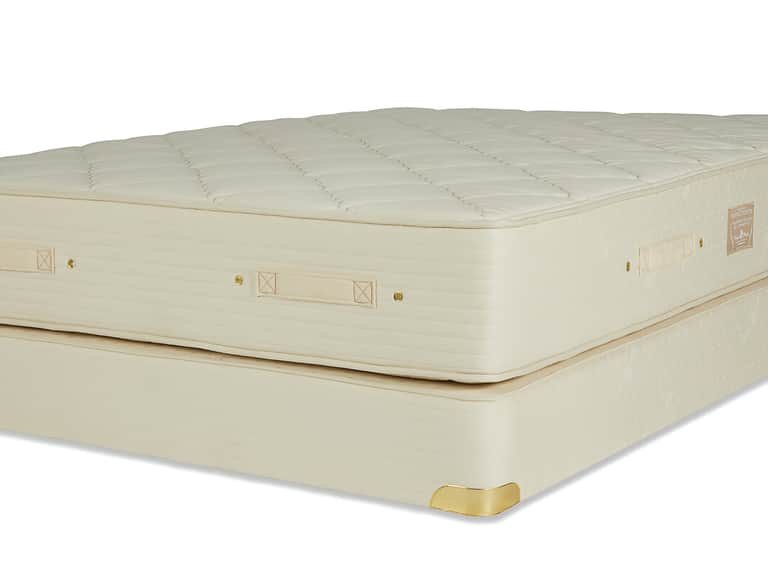
Consider the description of the Royal-Pedic Natural Latex Quilt-top Mattress, which identifies an eight-inch latex core comprising a six-inch firm layer and a two-inch medium layer. Its description also notes a quilted cover incorporating wool and cotton. This is one example of how a maker can explain a mattress through its components: a firmer foundation paired with a more yielding layer, enclosed within a separate quilted surface. The listed construction offers clues, though an individual sleeper’s impression remains personal.
It is worth noticing what a mattress description does and does not tell you. Measurements and materials provide a useful map, but they cannot precisely predict how a surface will feel to every body. Nor does a long list of fibers automatically imply a more comfortable bed. Specifications are most useful when read as evidence about construction—not as substitutes for an informed comparison.
Matching construction to sleep position
Sleep position can offer a practical way to think about comfort, without turning mattress choice into a rigid formula. Side sleepers often place concentrated pressure on their shoulders and hips. They may appreciate a surface with enough give to cushion those areas while still supporting the rest of the body. In a layered latex mattress, the softness and depth of the upper layers may be especially noticeable.
Back sleepers may look for an even balance: cushioning that follows the body’s shape, paired with support that feels steady. Stomach sleepers, who can find excessive softness uncomfortable, may prefer a firmer overall surface. But people do not always sleep in one position all night, and comfort cannot be reduced to a position chart. Past experiences, sensitivity to pressure, and simple preference count too.
For couples with different comfort preferences, a shared mattress presents a small design problem. Differences in body size, preferred sleeping position, and tolerance for a lively surface may affect whether one firmness feels suitable to both people. The best approach is to test together when possible, discuss which part of the feel is causing discomfort, and examine whether the mattress offers a configuration that addresses those preferences. Do not assume that a firmness label alone will settle the question.
It can be useful to compare mattresses in a consistent way. Lie down in the position you usually sleep in, allow enough time for your body to settle, and pay attention to the shoulders, hips, and lower back. Notice how easily you change position and whether the surface feels supportive rather than merely soft. If testing at home, use the mattress for the period allowed under the stated trial terms and note what changes with repeated nights. A brief first impression is informative, but it is not always conclusive.
The role of the cover and foundation
A latex core is only part of the sleeping surface. The cover and any quilting add another tactile layer, which may soften or slightly alter the way the foam is felt. Wool, cotton, and stretch-knit fabrics, for example, contribute different textures and can affect how closely the surface follows the body. A tightly fitted cover may make a bed feel more taut; a more generously cushioned quilt may make the first impression softer.
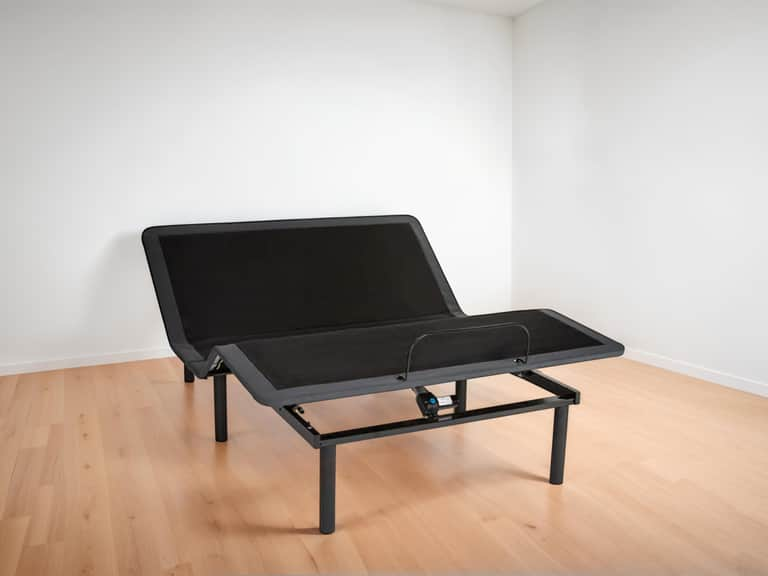
The foundation matters too. Slats, a platform, a box spring, or an adjustable base each support the mattress differently, and compatibility depends on the manufacturer’s guidance. A foundation that does not provide appropriate support may change the feel of the mattress or create problems that have little to do with latex itself. Before settling on a bed, confirm the recommended support system, slat spacing, and any restrictions on adjustable bases.
Even sheets and mattress protectors can influence the surface. A thick pad may soften or obscure some of the latex’s distinctive response; a more streamlined protector may preserve more of the mattress’s original feel. This does not mean one kind is automatically preferable. Protection, washability, and comfort all deserve consideration, particularly when the mattress is a long-term purchase.
A careful comparison, rather than a perfect promise
As you compare natural latex mattresses, look for clear information about composition, layer order, thickness, and firmness. Ask whether the product contains natural latex alone or a blend, and seek clarification when descriptions use broad or ambiguous terminology. Review the care instructions, dimensions, cover construction, and foundation requirements. If a seller offers a trial period or warranty, read the terms closely; conditions vary, and the headline promise may not explain every practical detail.
Keep your own priorities specific. “I want a comfortable bed” is true but difficult to act on. “I want a buoyant feel, pressure relief at my shoulders, and enough support that my hips do not sink too far” is more useful. So is “I prefer a surface that responds quickly when I change position.” Naming the sensation you seek helps you interpret specifications and communicate what you notice during a test.
Natural latex has a reputation for durability and resilience, but no material makes a mattress immune to wear. Construction, use, care, and the foundation beneath it all affect how a bed performs over time. A mattress is also a layered object in the most literal sense: its comfort comes from the interaction of core, comfort layers, cover, bedding, and support system. The most attractive claim on a label cannot tell that whole story.
The feel is in the arrangement
Natural latex is neither one sensation nor one solution. Its most recognizable quality is a springy, responsive return, but the actual feel of a mattress depends on the firmness and thickness of its latex, the sequence of its layers, and the materials wrapped around them. A deeply cushioned construction can feel quite different from a firmer, more uniform core, even when both are described as natural latex.
For anyone considering latex mattress layers, the useful question is not simply whether the material is soft or firm. It is how the bed responds at the surface, where pressure is relieved, how readily it rebounds, and whether its support feels appropriate across the night. The answers are individual. The construction can be described; comfort must still be discovered.
That discovery need not be mysterious. Read the specifications, compare the arrangement of the layers, and pay attention to the sensations that matter to you. A mattress’s materials tell part of its story. Its resilience, its layering, and the body’s response tell the rest.