Organic Mattress Guide
What to Examine in a Naturepedic Organic Mattress
An organic label can be a useful beginning, but it is not a complete description of a mattress. To compare Naturepedic models with care, look past broad claims and examine the layers, materials, certifications, comfort choices, and support requirements that make each mattress what it is.
Published November 7, 2026
A mattress is easy to describe in a sentence and difficult to understand in a specification sheet. It may be called organic, natural, breathable, supportive, or free from certain substances. Those words can point toward meaningful qualities, but they do not tell you everything about what is inside, how the mattress is assembled, or whether it will suit the person sleeping on it. The useful work begins when a general promise becomes a series of specific questions.
That is especially true when considering an organic mattress from Naturepedic. A manufacturer may offer several models, and their construction, feel, intended use, and certifications can differ. A name shared across a product range does not mean every mattress has the same materials or qualifications. The aim, then, is not to treat “organic” as a verdict, but to read the details: what is certified, which component it applies to, what makes up each layer, and whether the resulting design fits your needs.
This is a practical guide, not a substitute for current product documentation. Specifications can change, and certification status may depend on the precise model or component. Confirm the details on the product’s current technical page and, where necessary, in the certifier’s own directory before making a decision.
Start with the exact model
Before comparing materials, write down the full name of the Naturepedic mattress you are considering, including its size and version. Product families sometimes include models with similar names but different constructions. A line may offer more than one firmness, a children’s model alongside an adult mattress, or versions made for different sleep preferences. Even a seemingly small distinction can affect the layers, feel, price, and applicable certifications.
Look for a current specification sheet, not only a short promotional description. A useful document should identify the mattress’s construction in enough detail to distinguish its cover, comfort layers, support core, and any fire-protection materials. It should also state the product’s dimensions, height, firmness options, recommended foundation, care instructions, warranty terms, and applicable certification information. If an important detail is missing, ask the manufacturer or retailer to clarify it in writing.
Make comparisons model to model, rather than brand to brand in the abstract. “Naturepedic mattress” is too broad a category to establish that a particular product contains a particular material or holds a particular certification. The product page, label, and supporting documents are the evidence to examine.
Read the materials layer by layer
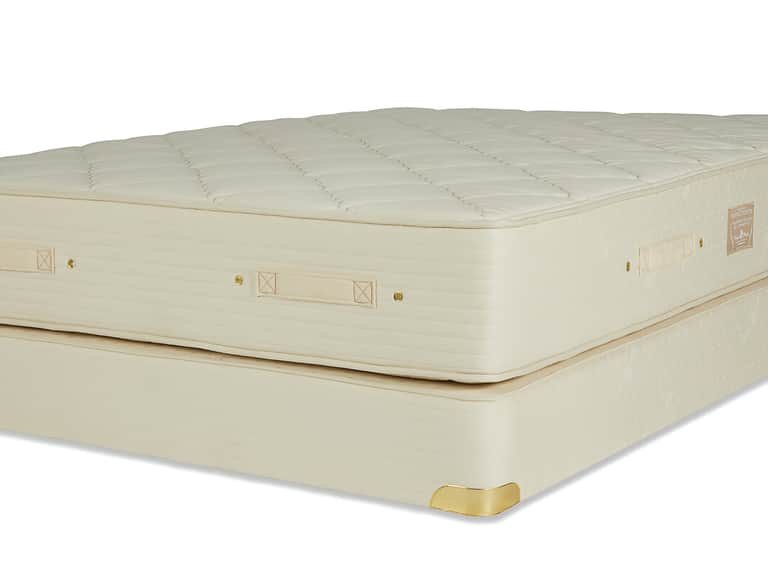
A mattress is an assembly. Its comfort may come from a quilted surface, a layer of cushioning, a resilient support system, or a combination of these. The outer cover and the internal layers may be made from different fibers and materials, and each can have a distinct role. Instead of stopping at a headline phrase such as “organic mattress,” trace the construction from the surface inward.
The cover and quilting
Find out what the cover is made from and whether it is quilted with additional fibers or padding. Cotton, wool, and other materials each bring different characteristics. The feel of the fabric, its breathability, and its care requirements matter in daily use; the details also help you understand what a certification claim does and does not cover. A certified fiber in the cover does not automatically establish that every internal component is certified to the same standard.
Check whether the cover is removable or intended to stay in place. A removable cover can sound convenient, but it should not be assumed to be washable unless the care instructions explicitly say so. Washing a mattress cover incorrectly can affect its fit, finish, or warranty. For spills and routine hygiene, a compatible protector may be a more practical solution than trying to clean the mattress itself.
Comfort layers
Comfort layers influence the first impression of a mattress and the way it responds under the shoulders, hips, and other pressure points. Identify the material, thickness, and position of each layer. If a specification uses a broad term such as “foam,” ask what kind of foam it means and whether it is a single material or a blend. If it names latex, look for more detail about the latex type and how it is processed. A material’s name alone does not tell you its firmness, resilience, or feel.
Layer thickness matters, but it cannot predict comfort on its own. The same nominal material can feel different depending on its density, firmness, shape, and placement within the mattress. An especially plush upper layer may feel inviting at first while providing a different kind of support from a firmer, more responsive surface. Consider the full construction rather than assuming that one appealing component defines the entire bed.
The support system
The support core is the deeper structure that bears the body’s weight and contributes to the mattress’s overall stability. It may use springs, latex, or another construction, depending on the model. Ask how the core is built, whether the mattress has distinct zones, and what the manufacturer says about the foundation it requires. If a model has a spring system, the details of its design may help explain its responsiveness and motion transfer. If it uses a foam or latex core, its firmness and overall construction deserve equal attention.
There is no universal material that makes a mattress supportive for everyone. “Support” is not the same as “firm,” and a very firm bed is not automatically a better match for every body. What matters is whether the mattress keeps the sleeper comfortably aligned while relieving pressure in the positions they actually use.
Understand what certifications say
Certifications can make mattress claims more precise, but they are not interchangeable. Different programs assess different things: the origin or processing of a fiber, chemical emissions, restrictions on certain substances, or the environmental and social practices associated with production. A certification mark is meaningful only when you know what it covers and can confirm that it applies to the product in question.
When you see a certification on a Naturepedic model, ask four simple questions:
- What is certified? Is the claim about the finished mattress, a fabric, a particular filling, or one ingredient?
- Which standard applies? The certification name and the scope of its requirements should be identifiable.
- Does it apply to this exact model? A brand’s general certification statement may not describe every item in its range.
- Can the claim be verified? Look for a certificate, current listing, product documentation, or a certifier’s searchable directory.
A familiar logo can be reassuring, but it should not do the reading for you. Certification programs have different purposes, and one mark should not be treated as proof of every quality a shopper might care about. For example, a standard focused on emissions does not necessarily establish that every fiber is organic. A fiber certification does not, by itself, answer questions about the mattress’s support or durability. Keep each claim within its stated limits.
It is also useful to distinguish “organic” from “natural.” These terms are sometimes used in proximity, but they do not necessarily describe the same thing. “Natural” can be broad and may not tell you how a material was grown, processed, combined with other substances, or tested. “Organic” claims should be supported by a defined standard and traceable documentation. Read the wording closely: certification of one component is not the same claim as certification of the entire product.
Match firmness and feel to the sleeper
Materials and certificates answer questions about construction and standards. They cannot tell you, on their own, whether the mattress will feel comfortable. That judgment depends on the sleeper’s body, preferred position, personal sensitivity to pressure, and idea of a pleasant surface. It also depends on the bed’s foundation and, sometimes, the bedding placed above it.
Side sleepers often need enough cushioning to prevent pressure from building at the shoulder and hip, while still wanting the middle of the body to feel supported. Back sleepers may prefer a surface that feels balanced rather than deeply enveloping. Stomach sleepers frequently look for a more stable feel, since excessive sink can be uncomfortable for some. These are tendencies, not rules: body shape, weight distribution, prior experience, and individual preference can change the picture.
Couples have another set of questions. Do both sleepers prefer a similar firmness? Is motion transfer a concern? Does the mattress offer a split configuration or other way to accommodate different preferences? A showroom test can be helpful, but a few minutes of lying down is not the same as sleeping at home. If the brand or seller offers a sleep trial, examine the terms carefully: the trial period, return process, required break-in time, fees, and any condition requirements all matter.
For an online purchase, use the available information methodically. Compare the manufacturer’s firmness descriptions across models, read return terms before ordering, and ask whether a listed firmness is a subjective rating or a measured specification. Terms such as “medium” are not universal units. They are most useful when applied consistently within the same product range.
Consider temperature, moisture, and sensitivity
Descriptions such as “cooling” and “breathable” can refer to different features. A fabric may allow airflow, a material may feel less clingy, or the construction may disperse heat differently from another design. None of these phrases is a guarantee that a sleeper will remain cool throughout the night. Room temperature, sheets, comforters, humidity, sleepwear, and individual physiology all play a part.
Ask which layer or feature is meant to provide the stated effect. Consider whether the mattress uses a dense comfort layer, a breathable cover, natural fibers, or another design element. Then think about your own sleep environment: a warm room and a heavy duvet can overwhelm the difference between two mattress covers. Sometimes adjusting the bedding is a simpler and less expensive way to change the feel of the bed.
People with allergies or sensitivities should be precise about what they are trying to avoid. A broad claim such as “hypoallergenic” does not identify every potential irritant or guarantee an individual response. Review the material list, care guidance, and any relevant testing information, and consult a qualified clinician about medical concerns. A mattress is not a treatment for allergy, asthma, or other health conditions.
Check the foundation, dimensions, and care
A mattress does not work alone. Its foundation can affect how it feels and whether it is supported as intended. Confirm the manufacturer’s requirements for a platform, slatted base, adjustable base, or foundation. Pay particular attention to the spacing and type of slats if those specifications are provided. An unsuitable base may lead to poor support or issues with warranty coverage.
Measure the room, not just the old mattress. Confirm the mattress’s actual dimensions and height, and consider whether the bed frame, fitted sheets, mattress protector, and headboard will accommodate them. A model that is taller than expected may change the proportions of the room or make getting in and out of bed less comfortable. For children’s beds, adjustable bases, or unusual frames, verify compatibility directly instead of relying on assumptions.
Care instructions deserve a place in the comparison. Some mattresses are spot-clean only; some covers may have specific cleaning restrictions. Ask how to manage a spill, whether a mattress protector is recommended, and which cleaning products should be avoided. Review the warranty alongside the care guidance. The warranty may define acceptable support, frame use, and maintenance in ways that are easy to miss when attention is focused on the purchase price.
Look beyond the first night
Durability is difficult to judge from a product description, but questions about it are still worthwhile. Ask what the warranty covers, how long the manufacturer expects the mattress to retain its intended performance, and what circumstances are excluded. A long warranty is not a promise that a mattress will feel unchanged for its full term. It is a document with specific conditions, thresholds, and remedies.
Check the trial and return policy with the same care. Is the trial offered by the manufacturer or retailer? When does the clock begin? Is there a minimum break-in period? Are pickup or return fees charged? Can the mattress be exchanged, returned, or only donated under certain conditions? These are not minor administrative details. They define how much room you have to learn whether the bed suits you in ordinary life.
Price also deserves context. An organic certification or a complex construction may help explain a mattress’s cost, but neither automatically proves that it is right for you or that it will last longer than every alternative. Compare like with like: size, layers, material quantities, support system, certification scope, warranty, delivery, and trial terms. A lower headline price may exclude important services; a higher one may reflect features you do not need.
A concise comparison method
When several Naturepedic models remain under consideration, use a short table or notebook entry for each. Record facts separately from impressions. Facts include materials, layer thicknesses, certifications, dimensions, compatible foundations, and care instructions. Impressions include pressure relief, ease of movement, temperature, and whether the surface feels inviting. Separating the two prevents a pleasing showroom feel from quietly standing in for evidence about construction, or a compelling certificate from standing in for comfort.
- Identify the exact model and version. Save the current product page and specification sheet.
- Map the construction. Note the cover, quilting, comfort layers, support core, and fire-protection approach.
- Verify claims. Record each certification, its scope, and the evidence that it applies to this model.
- Assess comfort. Consider sleep position, pressure sensitivity, firmness preference, and the needs of anyone sharing the bed.
- Confirm compatibility. Check the base, mattress dimensions, bedding, and care requirements.
- Read the terms. Review trial, returns, delivery, warranty, and any fees before purchase.
The useful conclusion
The best way to assess a Naturepedic organic mattress is to treat the product name as the start of an inquiry, not its answer. Inspect the actual materials, follow the construction from cover to core, and establish what each certification covers. Then turn to the less abstract question: how does this specific design align with your body, sleep position, climate, foundation, and preferences?
That approach is more demanding than trusting a broad label, but it is also more generous to the shopper. It allows a mattress to be judged on what it is rather than on what its marketing language suggests. “Organic” may be an important part of the decision. It is not a substitute for comfort, a guarantee of durability, or proof that every model in a range is made in precisely the same way.
In the end, a careful comparison joins two kinds of knowledge: documentary evidence about materials and standards, and lived evidence about how a mattress feels over time. Read the first closely, give the second a fair trial, and verify any detail that matters to your choice. A good night’s sleep is personal; the information used to pursue it should be specific.